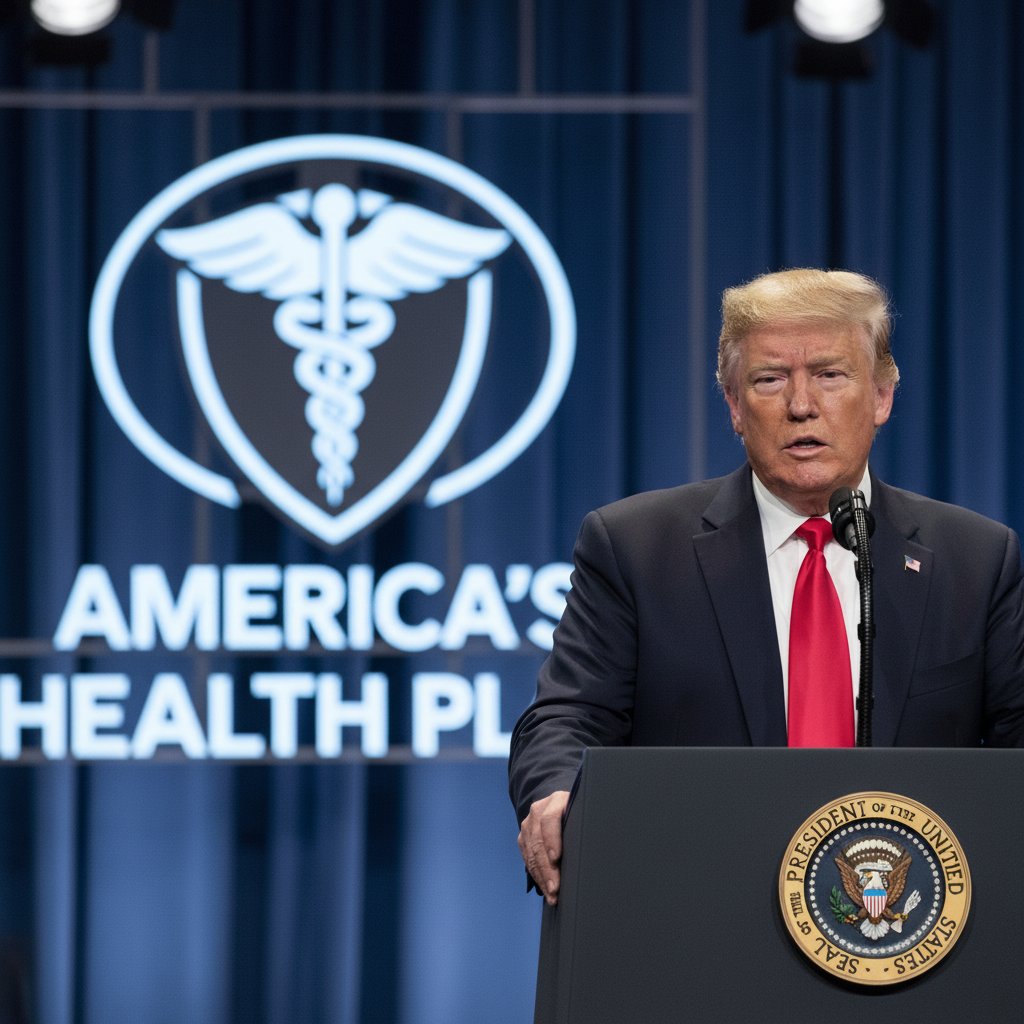
In a move aimed at addressing one of the most persistent vulnerabilities for the Republican Party, Donald Trump released a comprehensive framework on Thursday intended to lower healthcare costs for American families. The announcement, delivered via a five-minute video address, marks a significant attempt to seize the narrative on healthcare affordability as the 2026 midterm election cycle begins to heat up.
The framework emphasizes market-driven solutions, price transparency, and a reduction in middleman interference in the pharmaceutical supply chain. However, while the proposal offers a roadmap for GOP candidates, it faces a steep uphill battle in a deeply polarized Congress where bipartisan consensus on healthcare remains elusive.
A Strategic Pivot for the GOP
For years, the Republican Party has struggled to present a unified alternative to the Affordable Care Act (ACA). Political analysts suggest this new framework is an explicit acknowledgement that the party could face significant backlash from voters over the rising cost of care and prescription drugs.
By focusing on "affordability" rather than "repeal," the framework signals a shift in rhetoric. The proposal centers on several key pillars designed to appeal to both the party's base and undecided moderate voters who cite healthcare as a top-tier concern in recent polling.

Key Pillars of the Framework
The framework outlines a series of executive and legislative goals aimed at disrupting the current status quo of the medical industry. According to the video address, the primary focus is on empowering the consumer and stripping away the "hidden fees" that drive up the cost of care.
The following table summarizes the primary objectives of the framework compared to current market challenges:
| Focus Area | Proposed Solution | Current Challenge |
|---|---|---|
| Price Transparency | Mandatory upfront pricing for all hospital procedures and diagnostic tests. | Opaque billing practices and "surprise" medical bills for insured patients. |
| Pharmacy Benefit Managers | Reform of PBMs to ensure rebates are passed directly to consumers at the pharmacy counter. | Complex rebate systems that critics say keep list prices for drugs artificially high. |
| Insurance Choice | Expansion of Association Health Plans and short-term limited-duration insurance. | Limited options and high premiums in certain individual market exchanges. |
Legislative Realities and Polarization
Despite the clear strategic intent, the framework's path to implementation is fraught with difficulty. In both the House and the Senate, healthcare remains a partisan flashpoint. Democrats have already signaled their opposition, arguing that the framework’s emphasis on "short-term plans" would undermine protections for individuals with pre-existing conditions—a claim the GOP has repeatedly denied.
Industry experts also warn that the focus on Pharmacy Benefit Managers (PBMs) will trigger intense lobbying efforts from the pharmaceutical and insurance sectors. While there is some rare bipartisan interest in PBM reform, the broader package is unlikely to garner the 60 votes necessary to clear the Senate filibuster in its current form.

The Midterm Stakes
The timing of the announcement is not coincidental. As the 2026 midterms approach, healthcare affordability continues to rank alongside inflation and border security as a deciding factor for voters. Internal GOP polling reportedly shows that the party is viewed as less trusted on healthcare issues compared to Democrats, a gap this framework seeks to close.
"This is about giving our candidates something to run on, not just something to run against," said one senior GOP strategist who requested anonymity to discuss internal party tactics. "We know the Democrats will make healthcare a central theme of their campaign. This framework allows us to go on the offensive by focusing on the actual costs people pay at the doctor’s office."
Critics, however, view the move as largely performative. They argue that without a detailed legislative text or a clear path through Congress, the framework serves more as a campaign talking point than a viable policy shift.
Expert Analysis and Outlook
Economists remain divided on whether the proposed market-driven reforms would yield immediate savings for consumers. While price transparency has long been a bipartisan goal, previous attempts to enforce it have met with mixed results as hospital systems find ways to comply with the letter of the law while obscuring the actual costs.

The focus on "competition" is a hallmark of the Trump-era healthcare philosophy, yet the consolidation of hospital systems and medical groups across the country continues to limit the actual choices available to patients in many regions.
As the debate moves from the screen to the halls of Congress, the true test of this framework will be whether it can evolve from a five-minute video into a series of actionable bills. For now, it remains a potent symbol of the GOP’s recognition that in the 2026 elections, the "kitchen table" issue of healthcare costs could determine the balance of power in Washington.